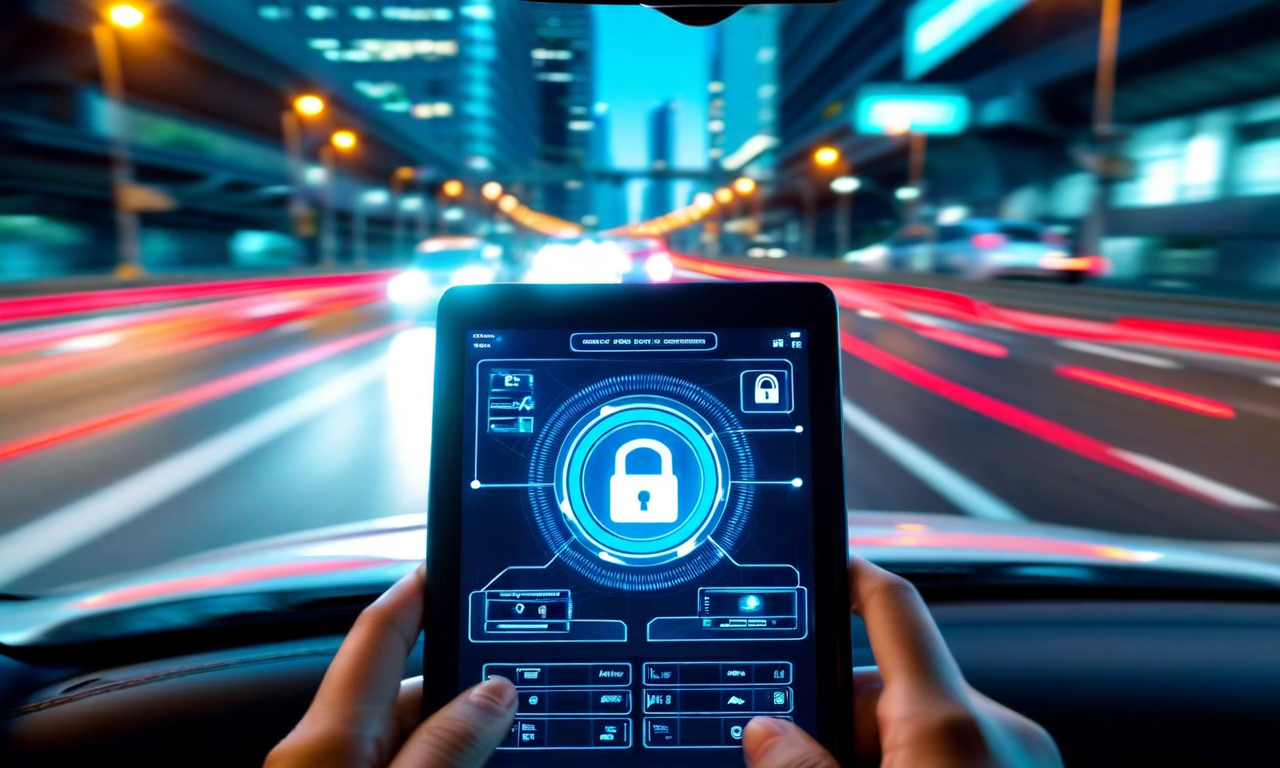
Safety is the most common concern new users raise about carpooling. Getting into a car with someone you don't know well requires a baseline of trust that informal carpooling arrangements have historically struggled to establish. Modern carpooling platforms have developed a comprehensive set of verification, monitoring, and community tools to address this challenge. Here is an honest examination of how they work — and how GoPool approaches safety as a foundational principle, not an afterthought.
The Trust Challenge in Shared Mobility
The safety concerns around carpooling are not irrational. They reflect genuine uncertainty about the character and intentions of people we share vehicles with. When we drive alone or use familiar transit options, we have well-established mental models for the risks involved. Carpooling with people outside our immediate circle introduces uncertainty that activates legitimate safety concerns.
Research on ridesharing safety shows that the vast majority of trips — well over 99.99 percent — complete without any safety incident. But rare events are not the only safety concern worth designing for. More common, lower-stakes experiences — feeling uncomfortable, experiencing harassment, sharing a vehicle with an unsafe driver, or simply feeling unable to leave a situation that feels wrong — deserve serious design attention even if they do not make headlines.
Effective carpooling safety systems address three categories of risk: pre-trip risks (who am I getting into a car with?), in-trip risks (what happens if something goes wrong during the ride?), and community risks (how does the platform prevent bad actors from accumulating negative interactions?). GoPool's safety architecture addresses all three.
Identity Verification: The Foundation of Trust
Every GoPool user — driver and rider — completes a government ID verification process before their first trip. This is not an optional feature or a premium tier benefit: it is a mandatory condition of platform access. Identity verification serves multiple purposes simultaneously. It establishes that users are who they say they are, creates accountability that deters bad behavior, and allows GoPool to permanently ban verified bad actors rather than simply having them create new accounts.
GoPool uses a combination of document verification (checking ID photos against database records), biometric matching (confirming that the person presenting an ID matches the photo on that ID), and database screening (checking for serious criminal history flags). Our process is compliant with relevant privacy regulations and uses encrypted, minimally-retained data practices.
For drivers specifically, identity verification is supplemented by motor vehicle record (MVR) checks, which verify driving history including license validity, major traffic violations, and DUI records. Drivers with recent serious violations are not approved to drive on the platform. These checks are repeated annually and when triggered by incident reports.
Workplace email verification adds an additional layer of community trust that is particularly valuable for the daily commute context. When you carpool with someone who has the same employer email domain as you, or who is verified as a resident of your community, the trust foundation is meaningfully stronger than with an anonymous member of the public. GoPool actively encourages and facilitates workplace-verified carpooling as the primary use case.
Real-Time Tracking and Monitoring
During every GoPool trip, the platform tracks vehicle location in real time and makes this data available to trusted contacts designated by both the driver and all passengers. This feature serves both a safety function (trusted contacts can monitor trip progress and detect deviations from planned routes) and a practical function (family members and colleagues can track expected arrival times without repeated text exchanges).
Trusted contact sharing is one-way: the driver's location is shared with both their own trusted contacts and with each rider's trusted contacts. Riders can additionally share their location with their contacts independently of the driver's tracking. All location data is encrypted in transit and at rest, and is automatically deleted after trip completion unless retained in connection with a safety incident report.
Our route deviation alert system monitors trip progress against the planned route and flags significant deviations to GoPool's safety monitoring team. In rare cases where a deviation appears concerning, our team can attempt to contact both driver and passengers and, if warranted, coordinate with emergency services. This system has been activated a small number of times in our platform's history, and in each case the deviation had an innocent explanation (traffic diversion, a passenger requested an additional stop). But the system exists and works, and its existence provides a meaningful deterrent and safety net.
Emergency Features and Incident Response
Every GoPool app includes a one-tap emergency button that connects directly to emergency services (911) and simultaneously alerts GoPool's safety team with the user's current location and trip details. This button is prominently placed in the app interface and does not require navigating through menus — it is accessible within one tap from any screen during an active trip.
In addition to the emergency button, GoPool provides a "check-in" feature for trips where a passenger wants an added layer of accountability. When check-in is activated, the app sends periodic silent confirmations to the passenger's designated trusted contact. If the passenger fails to confirm within a set time window, the trusted contact is alerted to check in — providing a human safety net alongside the technological one.
GoPool's incident response team operates around the clock and is trained to handle safety reports with urgency and sensitivity. Reports are triaged within minutes, and credible safety concerns trigger immediate account suspension pending investigation. Our zero-tolerance policy for incidents involving violence, harassment, or deliberate endangerment results in permanent platform bans and, where legally appropriate, reporting to law enforcement.
Community Trust Scores and Mutual Review
After every GoPool trip, both drivers and riders are invited to rate the experience and each other. These ratings feed into each user's community trust score — a comprehensive metric that reflects driving safety, reliability, communication quality, and overall ride experience as rated by the people who have actually carpooled with them.
Community trust scores are visible to potential carpool matches before they accept a match. Users can review their potential carpool partner's average rating, the number of trips they have completed, and any recent reviews — enabling them to make an informed decision about whether to proceed. Users who fall below a minimum trust score threshold are suspended from the platform pending a review of their account.
The mutual nature of the rating system — where drivers rate riders just as riders rate drivers — creates accountability in both directions. Riders who are habitually late, disrespectful, or unpleasant to travel with accumulate lower scores and receive fewer match opportunities. This community self-regulation is one of the most effective safety mechanisms on the platform: it harnesses the collective judgment of thousands of real trip experiences to surface and address problematic behavior before it escalates.
Building a Culture of Safety
Technology can create the conditions for safety, but it cannot guarantee it. Ultimately, carpooling safety depends on the culture of the platform — the norms, expectations, and behaviors that users internalize and model for each other. GoPool invests in safety culture through user education, community guidelines, and transparent communication about how safety issues are handled.
Our community guidelines are not buried in terms of service — they are a featured part of the onboarding experience, and users acknowledge specific safety commitments before their first trip. These commitments cover driving safely, treating carpool partners respectfully, honoring schedule commitments, and reporting safety concerns promptly. Making these expectations explicit and having users actively acknowledge them at the start of their GoPool experience creates a normative foundation for safe carpooling behavior.
Safety in carpooling is not a solved problem — it is an ongoing commitment. We invest continuously in improving our verification systems, our in-trip monitoring, and our incident response capabilities. We publish an annual safety report with aggregate data on incident rates, response times, and platform actions taken. We believe that transparency about safety performance is itself a safety feature: it holds us accountable and demonstrates to users that their safety matters to us as much as it matters to them.
To report a safety concern or learn more about GoPool's safety features, visit our safety center in the app or contact safety@gopool.house.