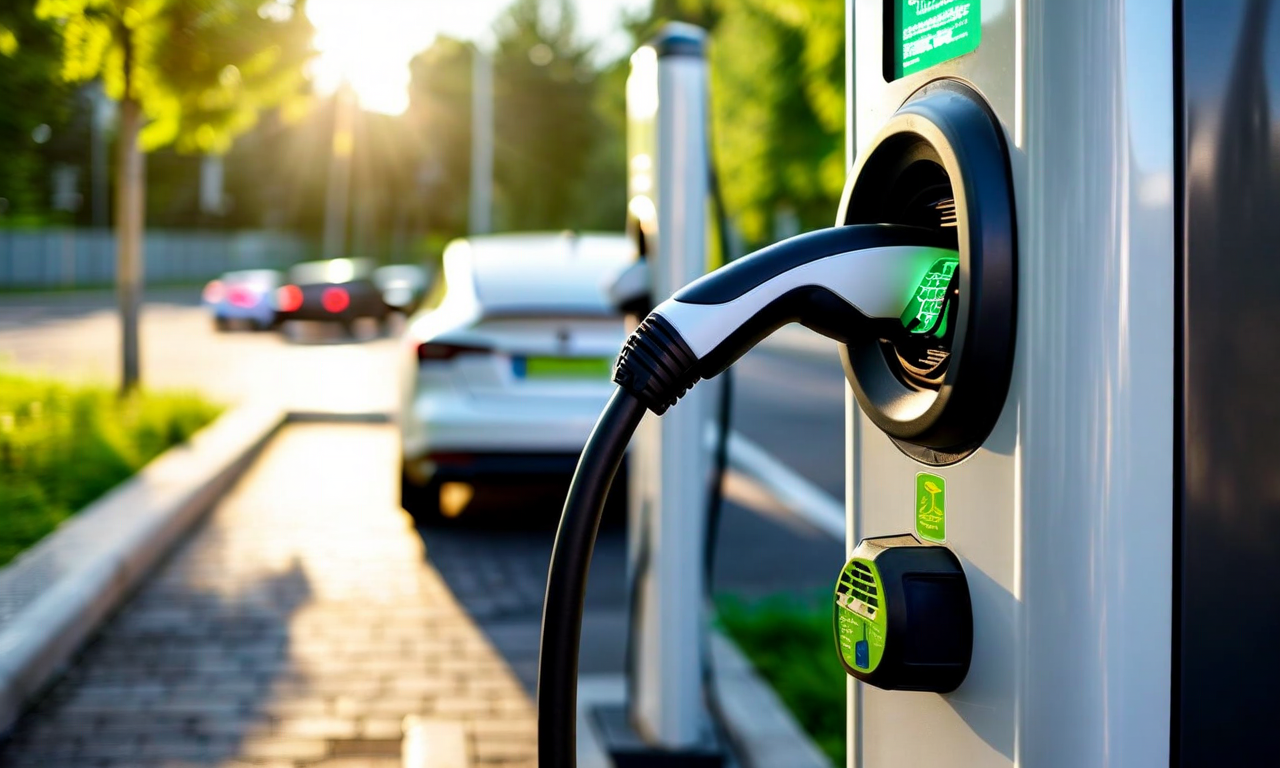
Electric vehicles and carpooling are two of the most powerful levers available for reducing the environmental and financial cost of urban commuting. Individually, each makes a meaningful difference. Together, they create a combination that is far more powerful than the sum of its parts — and GoPool is designed to help drivers and riders capture that potential.
The EV Revolution in Numbers
Electric vehicles have moved from a niche technology to a mainstream option at remarkable speed. In 2020, EVs represented less than 2 percent of new car sales in the United States. By 2025, that share has grown to approximately 9 percent, with EV registrations accelerating as battery costs fall and charging infrastructure expands. Globally, EVs now account for about 18 percent of new vehicle sales, with particularly high adoption in California, the Pacific Northwest, and other progressive energy markets.
The economics driving this adoption are compelling and continuing to improve. The average new EV now costs about $50,000 — somewhat higher than the average new gasoline vehicle, but the operating cost advantage quickly compensates for the price premium. Electricity costs an average of $0.016 per mile for an EV, compared to $0.12 per mile for a gasoline vehicle — a seven-to-one efficiency advantage that translates to roughly $1,000 per year in fuel savings for a typical commuter.
Add in lower maintenance costs (EVs have far fewer moving parts and require no oil changes, transmission service, or exhaust system maintenance), and the total cost of ownership advantage of EVs over gasoline vehicles becomes compelling over a 5-7 year ownership period for most commuters who drive regularly enough to benefit from fuel savings.
Why EVs Are Particularly Well-Suited for Carpooling
Electric vehicles have several characteristics that make them exceptionally well-suited as carpooling vehicles. The first is the cabin experience. EVs are dramatically quieter than internal combustion vehicles — the absence of engine noise creates a fundamentally more pleasant environment for conversation, which is central to a positive carpooling experience. GoPool's review data shows that EV carpoolers rate their ride experience 18 percent higher on average than conventional vehicle carpoolers, with "quiet and comfortable ride" as the most frequently cited positive attribute.
The second is the charging economics of sharing. When the energy cost of a trip is shared between carpoolers, the per-person fuel cost of an EV commute becomes almost negligibly small. A round-trip commute of 32 miles in an efficient EV might cost $0.50 in electricity. Split between two riders, that is $0.25 each — a figure that makes the financial benefit of carpooling feel more like a pleasant bonus than a meaningful reason to do it. This psychological shift matters: GoPool users in EV carpools report being more motivated by the social and environmental benefits of carpooling than by cost savings, which tends to produce more stable long-term carpooling behavior.
The third factor is the HOV lane advantage. In California and many other states, EVs already receive solo occupancy HOV lane access during their early adoption period. As these exemptions phase out — as they are in California from 2025 onwards — EV drivers who previously used HOV lanes as solo drivers will need at least one passenger to retain that benefit. This creates a significant new incentive for EV owners to carpool, and GoPool is positioned to help them find verified, compatible carpool partners.
The Combined Environmental Impact
The environmental case for EV carpooling is extraordinary. To understand why, we need to look at the full chain of emissions from personal transportation.
A typical gasoline-powered vehicle driven by a single commuter produces approximately 0.28 kg of CO₂ per mile at the tailpipe, plus an additional 0.06 kg per mile in upstream emissions from fuel production — a total of about 0.34 kg CO₂-equivalent per passenger mile. For a 32-mile round trip commuted 250 days per year, that is 2,720 kg (2.72 metric tons) of annual emissions.
A solo EV commuter, drawing from the current US electricity grid mix of roughly 40 percent renewables and 60 percent fossil fuels, produces approximately 0.065 kg CO₂ per mile — an 81 percent reduction from the gasoline baseline. For the same 32-mile round trip, the EV solo commuter emits 520 kg per year — a massive improvement, but still a significant emissions footprint.
Now add carpooling. A two-person EV carpool reduces per-person emissions to 260 kg per year — a 90 percent reduction from the gasoline solo baseline. A three-person EV carpool brings per-person emissions to 173 kg per year — a 94 percent reduction. And as the electricity grid continues to decarbonize — which is happening steadily as renewable generation capacity grows — even these figures will improve further. In states like California, where the grid is more than 60 percent renewable, a three-person EV carpool is already approaching near-zero lifecycle emissions per passenger mile.
Workplace Charging as a Carpooling Catalyst
One of the significant practical advantages of EVs in the carpooling context is the growing availability of workplace charging. Employers who install EV charging stations at their facilities are not just providing a benefit for individual EV owners — they are creating the conditions for a much richer carpooling ecosystem.
When carpooling EV drivers can charge at work, they eliminate the need for at-home charging top-ups on carpool days, simplify the economics of sharing energy costs, and create natural social gathering points around charging stations that can facilitate carpool coordination. GoPool's workplace integration supports charging station location data, so EV carpoolers can easily identify whether their driver will be charging at the workplace and factor that into their commute planning.
For employers, workplace EV charging combined with a carpooling program creates a powerful sustainability narrative: you are reducing the per-employee commuting emissions of your workforce by providing both the vehicle energy infrastructure and the matching platform to enable shared electric commuting. This combination is increasingly attractive to companies making public climate commitments and reporting Scope 3 emissions data to regulators and investors.
GoPool's EV-Specific Features
GoPool has developed a set of features specifically designed to optimize carpooling for EV drivers and their passengers. Our EV cost-splitting algorithm accounts for actual electricity costs rather than fuel prices, using vehicle-specific efficiency data and local electricity rate information to calculate each rider's accurate cost share. Unlike fuel cost splitting, which involves driver receipts and per-gallon calculations, EV cost splitting is fully automated and requires no manual input from the driver.
Our matching system also flags EV vehicles in driver profiles, so riders who prioritize a quiet, zero-emission commute can filter for EV drivers when reviewing their match options. Conversely, EV drivers who are approaching the expiration of their solo HOV access can set preferences to prioritize finding carpool partners who need that same lane advantage, creating mutually beneficial matches around the HOV benefit.
Looking ahead, we are developing integration with EV charging networks that will allow GoPool to recommend optimal charging timing for carpooling drivers — helping them maintain consistent availability for their carpool commitments while maximizing the use of off-peak electricity rates that reduce both cost and grid carbon intensity.
The Future Belongs to Shared Electric Commuting
The trajectory of both EV adoption and carpooling platform technology points clearly toward a future in which shared electric commuting becomes the default for a growing share of urban workers. Battery costs continue to fall. Charging infrastructure continues to expand. AI matching continues to improve. And the financial and environmental case for combining the two gets stronger every year.
GoPool is building for that future today. If you drive an EV and are looking for carpool partners who appreciate a quiet, eco-friendly commute — or if you are a passenger looking for the cleanest possible daily journey to work — we would love to match you with the ideal carpool partner for your route.
Emissions calculations based on EPA emissions factors, EIA electricity grid data, and GoPool internal EV trip analytics. Vehicle efficiency figures reflect EPA combined rating averages for 2024 model year vehicles.